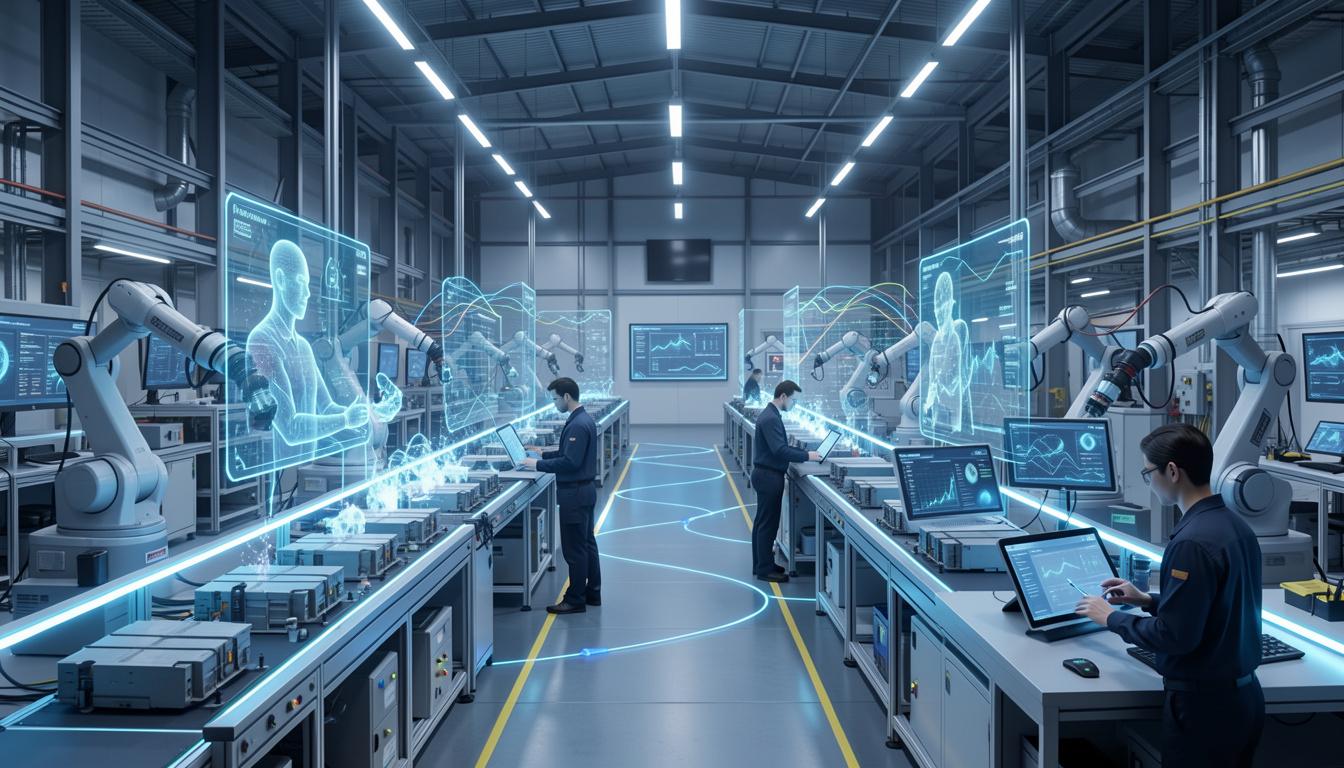
Understanding AI Agents: Applications, Use-cases, Benefits & Future

Yogesh Pant
Nov 04, 2025

AI Agents

The positive impact of Artificial Intelligence (AI) on businesses isn’t hidden from anyone. It has even encouraged organizations to invest in this growing technology to make their business more smart, efficient, and simplified. Meanwhile, the emergence of AI agents has significantly changed how different industries used to operate. But how do AI agents are making it happen? What exactly do they do? 

If you’re a tech enthusiast or someone looking to integrate this emerging technology into your current systems, it is too obvious to have these questions in mind. As these agents are becoming more advanced, they are increasingly being adopted by various sectors, including customer service, finance, healthcare, and marketing.   

In this comprehensive guide to understanding AI agents, we will break down the topic and explain the basics of AI agents, their types, applications, use cases across different industries, and future scope. We will also discuss the opportunities and challenges associated with this advanced technology. 

What are AI Agents?

Artificial Intelligence (AI) agents are advanced autonomous systems that mimic human intelligence to complete complex tasks, make data-driven decisions, and interact with users in real-time. These advanced AI agents are designed to learn from the data, adapt to different environments, and improve over time. They use state-of-the-art machine learning and AI algorithms. 

AI agents are often praised for their ability to operate independently to work for multiple systems or environments. For instance, multi-agent AI systems work closely to achieve a common goal. 

AI agents interact with end users through chat, voice, and immersive AR/VR technology. For example, have you ever interacted with a chatbot answering your queries 24/7 or commanded a virtual assistant like Alexa to play your favorite song? AI agents are making the technology more intelligent, accessible, and user-centric. 

Key Statistics and Facts About AI Agents You Should Know

  • The global AI agents predictive market is expected to grow from $5.1 billion in 2024 to $47.1 billion by the end of 2030 at a CAGR of 44.8%. (Source: Markets and Markets)
  • 67% of people in the US have reported frustration with traditional customer service, while AI agents have reduced this issue significantly. (Source: Salesforce)
  • 95% of healthcare institutions are expected to adopt AI agents by the end of 2025. (Source: Salesforce)
  • 69% of retailers who leverage AI agents have reported a boost in their revenue. (Source: Statista)
  • Financial institutions have reported an increase of 38% in profitability with AI agents. (Source: Forbes)

AI Agents

How Do AI Agents Work?

AI agents are smart software programs that work to simplify business operations. But what’s the science behind them? To better understand the workings of AI agents, we first need to look into the architecture of AI agents and its main components. 

So, here’s a break-down of the AI agent's architecture: 

Perception/Profiling Module

The perception module acts as the data collection system for an AI agent. It gathers raw information from the environment using sensors or input mechanisms like cameras, microphones, or other devices. This data can include text, audio, images, touch-based feedback, radio signals, and more. 

For example, a customer service AI might process messages, customer profiles, location details, timestamps, and chat history. Similarly, a sales AI might analyze customer interactions and transaction records to spot preferences, leads, and market trends.

Knowledge Base/Memory Module

This module stores and organizes the AI’s foundational knowledge, including rules, patterns, past experiences, and facts needed for decision-making. It allows the AI to recall previous interactions, learn from them, and apply that knowledge to future tasks. Over time, the knowledge base grows as the AI learns. 

For instance, self-driving cars store traffic laws, while virtual assistants remember user preferences and frequently asked questions.

AI Agents
Analysis and Decision-Making/Planning Module (Processor)

The processor combines data from the perception and memory modules and uses AI and machine learning algorithms to analyze it. It determines the best course of action, creates task sequences, and issues commands to achieve the AI’s goals. 

For example, a delivery routing AI might plan optimal routes using traffic data, delivery priorities, and vehicle capacity. The processor can use tools like optimization algorithms, neural networks, predictive models, or rule-based logic to make decisions.

Actuator/Action Execution Module

This module turns the processor’s decisions into real-world actions. It interacts with the environment or sends commands to output devices to achieve the AI’s objectives. Examples include text generators, voice synthesizers, or systems that send emails or texts. 

For instance, an AI integrated with APIs can update external systems like ERP or CRM software, or manage bookings for travel, hotels, or medical appointments. This module also monitors task completion and provides feedback for improvements.

Learning System (Adaptation Mechanism)

Only the most advanced AI agents have this component. It allows them to improve over time by learning from past interactions. The learning system uses techniques like:

  • Supervised learning: The AI learns from labeled examples to predict outcomes.
  • Unsupervised learning: The AI identifies patterns in data without explicit instructions.
  • Reinforcement learning: The AI learns by receiving rewards or penalties for its actions.

The structure of an AI agent depends on its purpose. A simple smart home system might only need sensors, a basic processor, and actuators, while a self-driving car includes all the modules mentioned above.

contact us

Different Types of AI Agents 

AI agents have found their place in literally every industry. However, these industries have different requirements and have their own mean of using these advanced systems. Thus, there are different types of AI agents available that are highly customized to fit any business requirement. 

Simple Reflex Agents

These intelligent agents work using the ‘condition action’ principle. These agents only react to the current perceptions, which simply means they don’t have an understanding of the past and the future world. Simple reflex agents work in real-time, more precisely as chatbots; however, these agents have limited functionality in complex industry environments. 

Model-based Reflex Agents

These agents work internally around the world. They can perceive the environment and respond that aren’t immediately obvious. They can help fill the missing information gaps and make autonomous decisions based on context. These agents make the AI agents more complex and agile than their counterparts. 

Utility-based Agents

These AI agents leverage a utility function to make real-time decisions. They can assess different actions based on the expected utility options of the optimal approach. The model is highly recommended as a multiple solution to a problem. The agent decides on the best. For instance, a self-driving car can decide on the safest and the fastest route. 

AI Agents

Goal-based Agents

These are among the most powerful AI agents out there. They can be customized to achieve a specific goal more precisely. These systems anticipate the consequences of the actions and make decisions based on data and intelligence. This means these systems can navigate complex scenes autonomously and respond to the environment via sensors. 

Learning Agents

These agents use reinforcement learning to improve over time. These types of against find a great place in agile industries, where business needs to keep up with the new trends. For instance, a virtual assistant continuously learns and improves their service in the background about customers’ wants and requirements. 

Hierarchical Agents

These AI agents work on a hierarchical structure, in which higher-level agents command lower-level ones to work towards a common goal. The structure helps businesses break down the complexities of multi-step processes into simpler tasks, allowing each AI agent to focus closely on the set of responsibilities. 

Key Features of AI Agents 

AI agents are indeed powerful systems that are known for their power-packed performance and effectiveness in streamlining business operations. Here are some features of Agentic AI you should know before integrating it into your existing systems: 

  • Automation: The most common feature associated with AI is that it automates the task. This means they can do repetitive or time-consuming jobs without human intervention. For example, AI agents can answer customer queries, sort emails, or even manage calendars. 
  • Learning Ability: AI agents leverage advanced machine learning (ML) technology, which helps them improve over time. They learn from data, past experiences, and interactions. For instance, a chatbot becomes better at answering questions the more it talks to users. 
  • 24/7 Availability: Unlike humans, AI agents don’t need breaks or sleep. They can work all day and night without stopping. This makes them ideal for tasks that require constant attention, such as monitoring security systems, providing customer support, or managing online services.
  • Personalization: AI agents can understand user preferences and provide personalized experiences. For example, streaming platforms like Netflix or Spotify use AI to recommend movies, shows, or songs based on what you’ve watched or listened to before. 
  • Speed and Efficiency: AI agents can process information and make decisions much faster than humans. They can analyze large amounts of data in seconds, detect patterns, and respond to requests instantly. This is especially useful in areas like fraud detection, healthcare diagnostics, or customer service.
  • Multitasking: AI agents can handle multiple tasks at the same time without getting overwhelmed. For example, a virtual assistant like Siri or Alexa can set reminders, play music, check the weather, and control smart home devices all at once.
  • Accuracy: AI agents are designed to minimize errors. They can perform tasks with high precision, which is especially important in fields like healthcare, where they help doctors diagnose diseases, or in finance, where they detect fraudulent transactions.
  • Cost-Effectiveness: AI agents help businesses save money on labor and increase productivity by automating tasks. They can handle large volumes of work without the need for extra staff, making them a cost-effective solution for many industries.
  • Adaptability: AI agents can adapt to different situations and environments. For example, they can be used in self-driving cars to navigate roads, in hospitals to assist doctors, or in schools to help students learn. 
  • Natural Language Processing (NLP): Many AI agents can understand and respond to human language. This allows them to communicate with users naturally, making interactions smoother and more intuitive. For example, chatbots and virtual assistants use NLP to answer questions or follow commands.

Want to Mobile App Development for your Project ?

Benefits of AI Agents for Businesses 

The widespread adoption of AI agents has been bringing a number of benefits for businesses across different industries and transforming the way they used to operate. Here are some benefits of AI agents for businesses: 

1. Enhanced Efficiency

AI agents have the potential to handle multiple customer interactions at once. It even reduces the response time, directly impacting the effectiveness of customer service operations. These agents first try to solve the issue itself, escalate to a human representative if there’s a need, and then choose the best representative with the perfect skills to take on the inquiry. This helps businesses handle a high volume of customer queries and problems without compromising the service quality. 

2. Improved Customer Satisfaction

AI agents offer quick and accurate answers to user’s prompts using large language models (LLMs). This faster response time adds to the higher customer satisfaction scores. These agents use data insights to personalize interactions to enhance overall customer experiences. They are subject to regular improvement as they continue to learn and adapt over time. 

3. 24/7 Availability

AI agents are available 24x7, unlike humans, who need regular sleep and frequent breaks. These agents can help customers anytime, regardless of the time zones or business hours. This help businesses meet user’s expectations for self-services, directly impacting customer loyalty. 

4. Scalability

AI agents can be easily scaled as your business grows. These advanced systems can handle the increased volume of customer queries, making them ideal for organizations to expand their business without compromising service quality. The agents can easily be adjusted to hold extra load as case volume increases. 

5. Data-driven Insights

AI agents provide valuable data to businesses about customer preferences, interactions, behaviors, and past experiences. Businesses can leverage this insightful data to gain information about their customer needs and preferences. It helps them improve their service offerings and customer experiences. 

6. Consistency and Accuracy

AI agents are known for their accuracy and consistency. They offer an accurate and fast response to customer queries, reducing the risk of errors and ensuring customers get the best possible help. They use agentic loops and human-like reasoning to improve the accuracy of the responses. This consistency helps businesses build trust among customers and offer them the experience they are looking for.                                      

Risks and Challenges of Integrating AI Agents

Although AI agents have proven their worth over time, it doesn’t mean they are out of any flaw. So, to help our readers better understand about these advanced AI systems, here are some challenges and risks of integrating AI agents for businesses: 

Multi-agent Dependencies      

Specific complex tasks require the expertise of multimodal AI agents. There is always a risk of malfunction when implementing multi-agent frameworks. These systems built on the same architecture may experience shared pitfalls.

Such challenges could cause failure of the system that includes involved agents or expose vulnerability to attacks. This showcases the importance of data governance in building basic models through training. 

AI Agents

Infinite Feedback Loops

The hands-off approach of using AI agents for reasoning offers great convenience to human users, but it also comes with certain risks. For instance, if an AI agent is unable to develop a well-thought-out plan or critically analyze its own results, it might end up repeatedly using the same tools or processes. 

This can lead to infinite loops or redundant actions, wasting time and resources. To prevent such issues, some level of real-time human oversight is often necessary to ensure the agent stays on track and operates efficiently.

Computational Complexity

Creating AI agents from the ground up is time-consuming and highly demanding in terms of computational resources. Training a high-performing AI agent requires significant amounts of data, processing power, and energy. 

Moreover, depending on the complexity of the task, these agents can take days or even longer to complete their work. This makes developing and deploying AI agents a resource-intensive process, which can be a barrier for smaller organizations or projects with limited budgets.  

How are AI Agents Being Used in Different Industries?

There are many use cases of AI agents for different industries. In fact, they have become a mainstream technology in several sectors that majorly include

1. Customer Service and Support

AI agents have greatly impacted customer service and support by offering fast, reliable, and 24/7 assistance to customers. These AI-driven tools, often called chatbots or virtual assistants, can handle a wide range of customer questions without needing human help. They can answer common questions, manage transaction issues, and more. This improves the customer experience by cutting down wait times and offering personalized support, while also helping businesses save on operational costs.

Big companies like Amazon and Zappos are using AI to boost their customer service. For instance, Amazon’s Alexa helps users shop, control smart home devices, and get real-time information, making interactions more engaging and satisfying. AI is also being used to automate responses, analyze customer feedback, and predict behavior, allowing businesses to provide customized experiences and proactive solutions. This makes customer service smarter, faster, and more efficient.

2. Sales and CRM Applications

Sales and Customer Relationship Management (CRM) tools are essential for businesses looking to improve customer interactions and drive sales growth. These tools simplify sales tasks like lead generation, managing customer data, and predicting sales trends, helping companies build stronger, more personalized relationships with their customers.

The best thing about CRM systems is their ability to store all customer information in one place. This makes it easy for sales teams to access detailed profiles, including past interactions, purchase history, and customer preferences. With this information, sales reps can customize their approach to each customer, which can lead to higher sales success.

CRM tools also often include analytics features that help businesses predict sales trends and spot growth opportunities. These insights are crucial for planning and can greatly improve a company’s performance. For example, HubSpot offers CRM tools with advanced analytics to support these needs.

Additionally, the automation offered by modern CRM systems reduces the time spent on repetitive tasks like data entry and scheduling follow-ups, freeing up sales teams to focus on connecting with customers and closing deals. 

3. Human Resources and Recruitment

Human Resources (HR) and recruitment technologies have greatly improved how companies manage their employees and hiring processes. These technologies make HR tasks easier, faster, and more effective, covering everything from hiring new staff to retiring employees.

In recruitment, tools like Applicant Tracking Systems (ATS) are essential. They help manage job postings, organize applications, and follow candidates throughout the hiring process. This speeds up hiring and keeps everything organized and efficient.

For managing employees, HR platforms offer tools for tracking performance, engaging employees, and running training programs. These tools help HR teams not only monitor, but also improve how employees perform and feel at work.

Additionally, AI and machine learning are becoming more common in HR applications. These technologies can predict which employees might leave, identify potential leaders, and suggest ways to improve workforce management. 

Ready to bring your B2B portal or app idea to life?

4. Personalized Marketing

Personalized marketing uses data and technology to create more relevant marketing messages for users based on their preferences, behaviors, and histories. This improves customer experience and makes marketing campaigns more effective.

Data analytics is the central point of personalized marketing. By examining customer data, businesses can spot patterns and preferences to tailor their messages. For example, Amazon uses customer data to suggest products, making shopping better for users.

Automated tools are also important in personalized marketing. Tools like Mailchimp can send personalized emails based on user behavior and preferences.

Personalized marketing isn't just online; it includes in-store experiences and direct interactions with customers. Technologies like beacons and RFID help create personalized shopping experiences in stores. More details are available on retail growth.

These points show how technology transforms business operations, improves customer interactions, and personalizes user experiences in various fields.

5. Financial Services

The financial services sector includes various businesses that manage money, such as banks, credit card companies, insurance companies, accounting firms, and investment funds. This industry is at the forefront of using technology to enhance efficiency and customer service. 

For example, fintech has changed how people bank, invest and manage financial transactions. Technologies like blockchain and artificial intelligence are used to boost security, reduce fraud, and make operations smoother.

AI Agents

Traditional banks are going online, and offering mobile banking services, so customers can do transactions, check balances, and manage accounts on their smartphones. Additionally, the financial services sector is focusing on personalization by using data analytics to customize products and services to meet individual needs. Regulatory technology (regtech) is another growing area, helping companies follow regulations more efficiently and at a lower cost.

6. Healthcare Management

Healthcare management involves the administration and oversight of healthcare systems, hospitals, and other medical facilities. This sector is changing significantly due to advancements in medical technology, new healthcare policies, and the need for cost-effective healthcare delivery. 

Technologies like electronic health records (EHRs), telemedicine, and AI-driven diagnostics are playing important roles in improving healthcare management.

For instance, Telemedicine has become very important during the COVID-19 pandemic, providing essential healthcare services remotely. This technology helps manage patient flow and reduces the risk of infections. 

Additionally, AI is helping in healthcare through predictive analytics, which uses data to predict outbreaks, patient admissions, and other important metrics. This helps in better resource allocation and management. The use of EHRs has also improved the accuracy of patient data, enhancing treatment outcomes and patient care. For more insights into healthcare management innovations, visiting sites like Modern Healthcare can be helpful.

7. Supply Chain and Logistics

Supply chain and logistics involve moving goods from manufacturers to consumers. This sector is vital for almost every industry and has seen a lot of innovation recently, especially with technologies like IoT, blockchain, and advanced analytics.

IoT devices help track goods in real-time, making sure they are transported efficiently and safely. This reduces delays and improves delivery accuracy. Blockchain technology enhances transparency by providing a tamper-proof record of transactions and product journeys from start to finish. F

Big data and analytics in logistics help companies predict trends, optimize routes, and manage inventory better. These technologies reduce costs, improve service delivery, minimize waste, and speed up processes. 

8. Manufacturing

AI has transformed manufacturing by boosting efficiency, lowering costs, and improving product quality. Technologies like predictive maintenance, robotics, and quality control systems are now common in modern factories.

  • Predictive Maintenance: AI predicts equipment failures before they happen, reducing downtime and maintenance costs.
  • Robots: AI-powered robots automate repetitive tasks, speeding up production and improving precision. They also reduce strain on workers, creating a safer work environment.
  • Quality Control: AI systems detect defects in products with higher accuracy than human inspectors, ensuring consistent product quality.

9. Security and Surveillance

AI has transformed security and surveillance by improving how we monitor and respond to potential threats. Technologies like facial recognition and anomaly detection are now commonly used to strengthen security in places like airports, retail stores, and public spaces. 

Beyond facial recognition, AI is also used for anomaly detection, which spots unusual patterns or behaviors that could signal security breaches or fraud. This is especially important for preventing crimes and keeping people safe, as noted in a report by IBM on AI in surveillance.

AI-powered surveillance systems can also process huge amounts of data, like CCTV footage, to provide real-time insights that humans might miss. This allows for faster responses to potential threats, making security more effective.

10. Research and Development

AI is a game-changer in research and development (R&D) across many sectors. It's speeding up innovation and making discovery processes more efficient. For example, in pharmaceuticals, AI algorithms can predict how well drug compounds work, which cuts down both the time and cost of developing new medicines.

In materials science, AI is invaluable. It helps in finding new materials with the desired properties much quicker than traditional methods. By analyzing huge datasets, AI models can foresee the properties of new materials, leading to breakthroughs in industries like electronics and aerospace. For a detailed look, check out the report by the Material Research Society.

Furthermore, AI is a big help in environmental research. It can model complex climate data to forecast future environmental conditions and impacts. This is vital for creating strategies to address climate change and its effects. 

11. Content Creation

Creating content involves coming up with topic ideas that will interest your audience, and then making written or visual content about those ideas. This content can be shared as a blog, video, infographic, or in other formats. It is important for digital marketing and managing a brand, as it helps build authority, engage customers, and achieve marketing goals.

The first step is to develop a content strategy. This means understanding who your audience is, figuring out what makes you unique, and deciding on the type of content that will appeal to your audience the most. 

Once you have a strategy, the next step is creating the content. This could include writing, editing, graphic design, and video production, depending on what format you choose. It's important to have a consistent voice and style that matches your brand and to make sure all content is optimized for search engines (SEO) so it can be easily found online.

Finally, you need to distribute and analyze your content. This means choosing the best channels to reach your audience, like social media, email marketing, or your own website. Analyzing how well your content performs is crucial to understanding what works and what doesn’t, so you can make improvements in the future.

12. Legal Compliance

Legal compliance in business operations means following the laws and rules relevant to your business activities. This can include areas like employment law, consumer protection, data privacy, and intellectual property laws. Staying compliant helps protect your business from legal issues and penalties, and also builds trust with your customers and partners.

For online businesses, a key area of compliance is data protection and privacy. Regulations like the General Data Protection Regulation (GDPR) in the EU and the California Consumer Privacy Act (CCPA) in the U.S. require businesses to handle personal data legally.

Intellectual property (IP) is another important area. Protecting your IP and respecting others' IP can prevent legal disputes and improve your business's brand value. Resources like the World Intellectual Property Organization (WIPO) offer guidance and services to manage IP rights.

Finally, businesses must follow industry-specific regulations, which can differ widely from one sector to another. Consulting with legal experts and using compliance management software can help businesses stay on top of these requirements.

13. Project Management

Project management is all about starting, planning, doing, controlling, and finishing the work of a team to achieve certain goals in a set time. The main challenge is to meet all the mobile app development project goals within the given limits.

First, project management involves setting clear goals, defining what needs to be done, and identifying the resources. Tools like Microsoft Project or Asana can help plan project timelines and tasks. For more details on creating a project plan, the Project Management Institute (PMI) offers resources and certifications.              

Lastly, monitoring and closing the project properly ensures it meets its goals and provides the expected value. This includes managing quality, and risks, and getting feedback from stakeholders. Tools like Smartsheet offer solutions for tracking and reporting on projects.

Each of these points shows the importance of good planning, execution, and review in different parts of business operations, from creating content to ensuring legal compliance and managing projects.

14. Real Estate Management

Artificial Intelligence (AI) is changing the real estate business by improving property management and customer service. AI tools can handle routine tasks like scheduling maintenance, managing leases, and processing payments. This reduces the workload for real estate professionals. For example, AI chatbots can answer questions from potential tenants at any time, providing quick responses and better service. This makes things more efficient and keeps tenants happier and more likely to stay.

AI also helps manage properties better through predictive analytics. By looking at data from different sources, AI can predict maintenance issues before they happen, allowing for proactive management and saving repair costs. Additionally, AI can help make smart investment decisions by analyzing market trends, property values, and investment risks. 

Furthermore, AI improves the real estate viewing experience with virtual tours and augmented reality (AR). Potential buyers or renters can explore properties remotely, which is very useful in today’s global market. This technology saves time and expands the customer base for real estate businesses. Overall, using AI in real estate management leads to more efficient operations, better customer service, and smarter decisions.

15. Travel and Hospitality

Artificial Intelligence (AI) is changing the travel and hospitality industry by improving customer experiences and operations. AI tools are used to customize travel suggestions, make booking easier, and improve hotel services. 

For example, AI algorithms look at customer data to give personalized travel tips and adjust prices dynamically, which can increase bookings and customer happiness. Also, AI chatbots handle customer questions and bookings 24/7, making it more convenient and engaging for customers.

AI also improves how hotels and travel agencies operate. For instance, AI can manage inventory and prices in real-time, responding to changes in demand better than old methods. This helps maximize revenue and keeps services available. 

Additionally, in the hospitality sector, AI-driven robots and smart devices improve guest experiences, like AI concierges (e.g., Hilton's "Connie") and smart room assistants that adjust settings based on guest preferences.

Your Success, Our Priority

Turn Your Idea Into Reality

businessbenture-shudaiimg

Future Scope of AI Agents

AI agents are becoming more advanced and useful every day. In the future, AI agents are expected to become more intelligent, reliable, and integrated into our daily lives. They will make tasks easier, solve big problems, and improve how we live, work, and interact with the world. The possibilities are endless, and the future of AI agents looks very exciting.

Here are some ways AI agents could shape the future:

  • Smarter Personal Assistants: AI agents like Siri, Alexa, and Google Assistant will become even better at understanding us. They will handle more complex tasks, like planning trips, managing finances, or even giving health advice.
  • Healthcare Help: AI agents will help doctors diagnose diseases faster and more accurately. They could monitor patients 24/7, remind them to take medicine, and even predict health problems before they happen.
  • Education Support: In schools, AI agents could act as personal tutors. They would help students learn at their own pace, answer questions, and provide extra practice in areas where they struggle.
  • Better Customer Service: Companies will use AI agents to improve customer support. These agents will solve problems quickly, answer questions, and provide personalized recommendations, making customer experiences smoother.
  • Self-Driving Cars: AI agents will power self-driving cars, making transportation safer and more efficient. They will navigate roads, avoid accidents, and reduce traffic jams.
  • Smart Homes: AI agents will make homes smarter. They will control lights, temperature, and security systems, making life more comfortable and secure.
  • Workplace Efficiency: In offices, AI agents will handle repetitive tasks like scheduling meetings, organizing emails, and analyzing data. This will free up time for employees to focus on creative and important work.
  • Environmental Protection: AI agents could help fight climate change by monitoring pollution, managing energy use, and finding ways to reduce waste.
  • Entertainment: AI agents will create personalized entertainment experiences. For example, they could recommend movies, create custom playlists, or even write stories based on your preferences.
  • Global Connectivity: AI agents will help people communicate across languages and cultures. They will translate languages in real-time, making it easier for people from different parts of the world to connect.

Conclusion

AI agents have significantly impacted the business's operations by simplifying and streamlining the tasks that take too long to complete/ Be it in any department, AI agents help teams with most of their tasks. 

The benefits of these advanced agents are many, including data-driven insights, better efficiency, scalability, and enhanced customer satisfaction. 

However, there are many flaws to the AI agents, which majorly include technical and ethical concerns. The proper planning and process execution can help enhance the capabilities of AI agents for streamlined business operations. 

FAQs

What is An AI Agent?

An AI agent is a software program designed to perform tasks automatically or assist humans. It uses artificial intelligence to think, learn, and make decisions. AI agents can be simple, like chatbots, or complex, like self-driving car systems. They are used in many areas, such as customer service, healthcare, and smart home devices, to make tasks easier and faster.

How Will AI Agents Work?

AI agents work by using data and algorithms to analyze information, make decisions, and perform tasks. They learn from past experiences and improve over time. For example, a chatbot uses natural language processing to understand and respond to questions. AI agents can also automate tasks, like scheduling appointments or monitoring systems, without human intervention.

Is ChatGPT An AI Agent?

Yes, ChatGPT is an AI agent. It is designed to understand and generate human-like text based on the input it receives. It can answer questions, write content, and assist with tasks like coding or brainstorming. However, it is a specialized AI agent focused on language tasks and does not perform physical actions like some other AI agents.

How Many Agents Are in AI?

There are countless AI agents, each designed for specific tasks. Some are simple, like virtual assistants, while others are complex, like those used in robotics or healthcare. The number of AI agents keeps growing as technology advances, and they are used in more industries and applications.

What is the Function of AI Agents?

The main function of AI agents is to automate tasks, solve problems, and assist humans. They can analyze data, make decisions, and perform actions based on their programming. For example, they can answer customer queries, manage schedules, or control smart home devices. Their goal is to make processes faster, more efficient, and less reliant on human effort.

Is AI Agent Good or Bad?

AI agents are neither inherently good nor bad—it depends on how they are used. They can bring many benefits, like improving efficiency, reducing errors, and solving complex problems. However, if misused, they can lead to issues like job displacement or privacy concerns.

Related Posts