2500+
Successful Projects

Fintech is one of the most lucrative and promising business ideas nowadays, so its shift from a short-term trend to a mainstream market segment is well-justified. Back in 2022, there were over 300 Fintech unicorns in the US, which increased to over 11,000 in 2024, showing a drastic increase. The growth indicates the high demand for robust fintech software that can meet today’s market needs. However, the high cost of building software in-house may encourage businesses to opt for a cost-effective alternative, i.e., Fintech development outsourcing.
Fintech development outsourcing is basically a hiring approach that involves engaging a website or mobile app development company to build fintech projects from scratch instead of relying on in-house teams. This is a widely adopted tactic for businesses to save money and time while ensuring top-quality development.
Table of Contents
So, if you think your in-house development team isn’t qualified enough to handle your Fintech development project or are looking for a cost-effective alternative, this comprehensive guide will help you understand the process, cost, benefits, and best practices. Let’s get started!

Fintech development outsourcing is the practice of hiring a specialized mobile app development company to develop, design, and maintain Fintech solutions. It allows businesses to leverage the specialized expertise from outside their in-house team.
Outsourcing helps businesses expect high-quality financial apps without building an in-house development team for every aspect of the project. With this approach, businesses can accelerate development timelines, reduce overhead costs, and get the best of cutting-edge technologies.
As mentioned above, Fintech is a growing trend that shows no sign of stopping. According to Statista, the revenue from the global Fintech market is likely to reach $141.18 billion by the end of 2028. 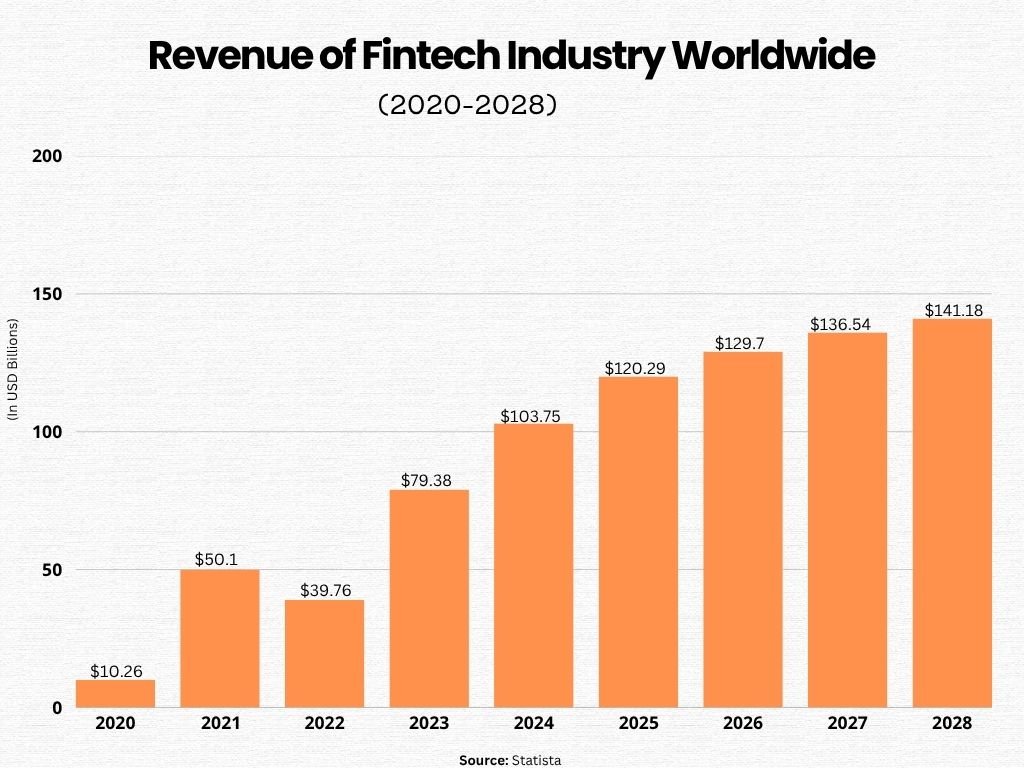
This forecast above highlights the growing trend for Fintech apps and is enough to encourage businesses to invest in this niche. The high-end fintech software solutions can help businesses stay updated with the financial market, simplify transactions, improve efficiency, and ensure transaction security.
As we have been witnessing how modern technologies have overcome traditional methods of banking and finance management. Today, there are only a few people who visit banks to do transactions, and the majority of Millennials and GenZs rely on Fintech apps.
With this, the growing trends in the Fintech industry include –
Outsourcing your Fintech software development holds numerous benefits for businesses, which mainly include
When you opt for Fintech development outsourcing, the chances of your project increase significantly. With this, you get a pool of experts to choose the right development team for your specific project requirements. You can even hire software developers from countries like the US, UK, India, and Ukraine and test their skills before hiring them. 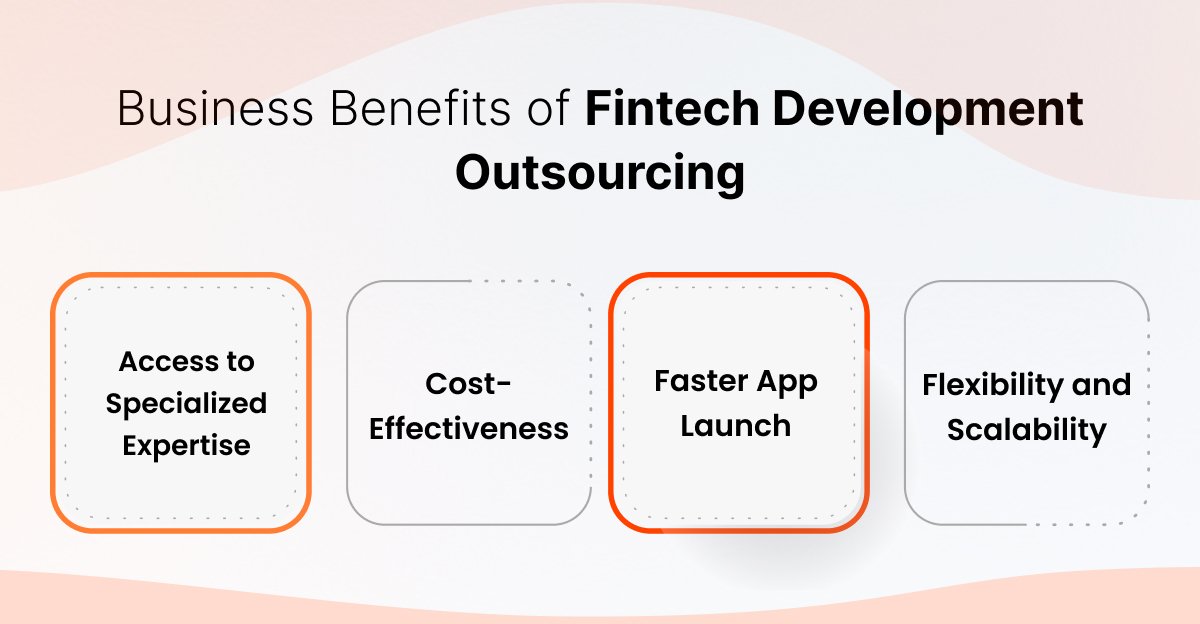
Businesses constantly look for several ways to reduce costs, and outsourcing is probably the best to do so. As you don’t have to invest in setting up the office, paying monthly rent, team training, in-house team salary, and benefits, you can save a lot with Fintech development outsourcing. You can invest the saved money in marketing and other core business activities.
We know you are excited about the day your dream project will launch. However, delays are unavoidable and often result in extending the launch date. But this is a rare scenario when you outsource your project to a professional development agency.
Flexibility and scalability are two of the best benefits of Fintech software development outsourcing. You don’t have to be bound by your in-house team’s 9-5 times. Professional software development companies are flexible enough to work on your projects beyond the regular office time. Additionally, they are expert in scaling your project with growing requirements.
When outsourcing IT development, you will have the option to choose between different outsourcing models. The success of your project greatly depends on your choice of outsourcing model. It is essential to evaluate all available models and choose the one that best aligns with your unique requirements.
In this model, a software development service provider manages project tasks based on specific goals and plans. This method helps set clear costs and lowers the risk of unexpected charges. However, projects with fixed scopes can restrict creativity, and changing priorities during development can lead to extra expenses.
This model involves hiring experts working with your company's development teams for long-term positions. It boosts performance and helps solve problems. You get temporary access to skilled workers, leading to consistent results at good prices. It's perfect for important business applications that need significant investment.
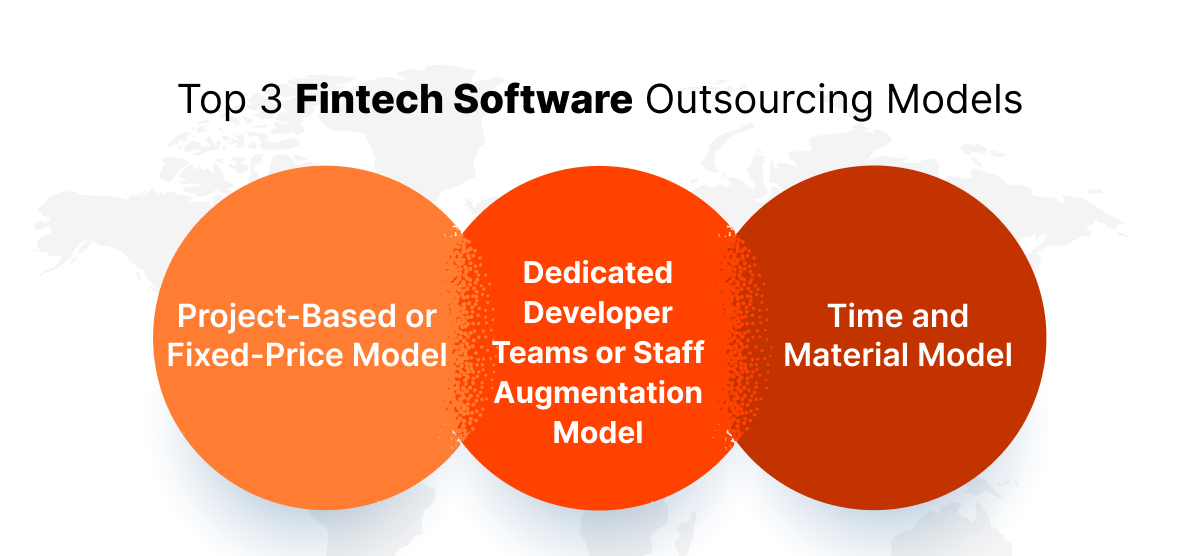
This model lets companies pay monthly for what they use, allowing costs to change based on needs. It supports changes but needs proper management to prevent projects from going over budget.
Although outsourcing has proved its worth for businesses, it is not always the case that you get the right partner. So, here are some considerations for outsourcing Fintech software development:
You need to meet the deadlines and launch the app as planned. Thus, check the project deadline and make decisions about FinTech development outsourcing. Analyze the vendor's ability to stick to promised timelines and quality. Pre-compile all queries to ensure this.
Ask the vendor for the tools and technologies they will use within the project. Analyze the technologies and resources needed to create the app and bring the idea to life. Knowing what resources the vendor will use is essential for achieving the desired app goals.
When you hire a team of developers for fintech development outsourcing, it's essential to manage every small detail from the start. Choose a vendor who requires minimal supervision. This consideration will allow you to have more time to focus on your main business functions.
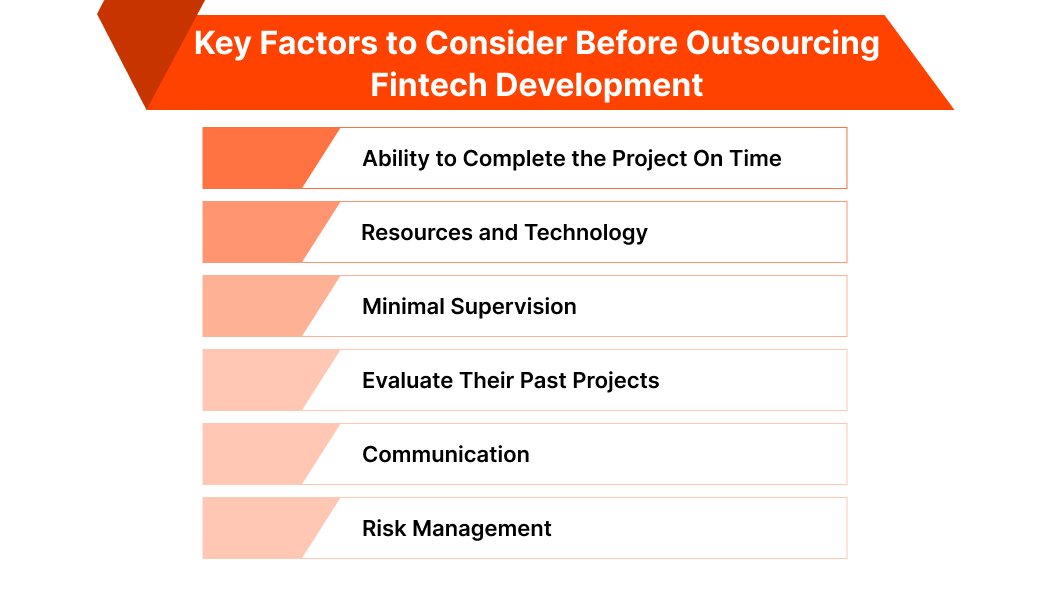
You need to review the vendor's past projects and previous work based on their networks and clients. This will help you learn more about the vendor and the services they offer. You can contact their previous clients before signing up for the project.
It's important to consider how you will communicate and collaborate with the vendor. Check how you will stay in touch and how quickly they respond. The communication channel should be clear and free of barriers to avoid misunderstandings with the project.
You need to know how well the vendor can handle risks that might come up unexpectedly. A risk management plan should include regular performance checks, contract compliance, and other factors. A good outsourcing partner should set clear services and standards, ensuring every aspect of the project works as planned.
The idea of Fintech development outsourcing is profitable and lucrative, but the only condition here is that you need to follow the process the right way. So, here’s aste-wise process of outsourcing your Fintech app development:
The first step in outsourcing fintech development is to define your project's needs clearly and more precisely. You should specify the type of app, the different features you want to include, and every detail of the project. This includes setting a budget and determining the launch date for your app in the competitive market.
Once you have defined the details, the next step is to choose the right team of developers. It's important to hire mobile app developers who can help with the process.
The ideal outsourcing partner should be chosen based on several factors, such as your budget, how easy they are to work with, their location, their skills, and other relevant considerations.
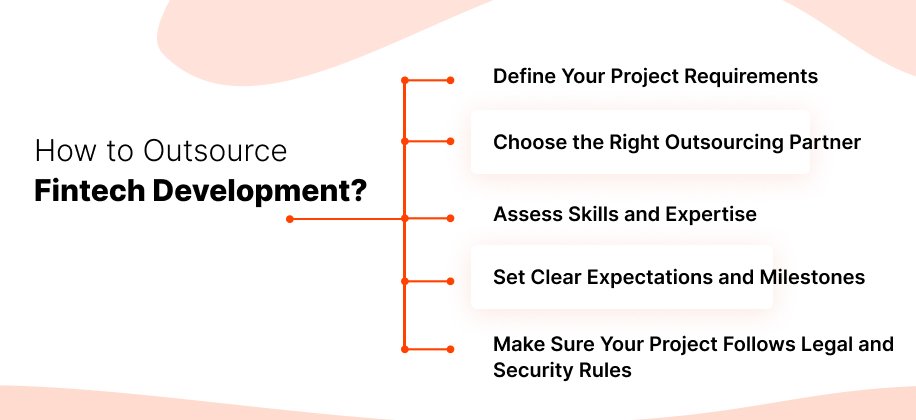
It's crucial to evaluate the skills and expertise of the developers for a fintech project. You should check if the skills will help determine if the team is suitable for the project.
Additionally, assess the expertise of the outsourcing partners to ensure they have a deep knowledge of the frameworks, programming languages, and tools needed for the project.
The project's aims and objectives must be clear when outsourcing financial technology. Vague expectations will lead to a vague project, preventing you from achieving your desired goal.
Set metrics as benchmarks tied to specific goals. Some goals may not be directly linked to numbers and dates. Setting milestones will help achieve the project's aim on time.
At this stage, you need to focus on making sure your project meets all the legal and security requirements. This means you have to understand the laws and regulations that apply to your industry and build your app in a way that follows these rules.
Security is a big deal, especially when you’re setting up a network. You have to make sure everything is safe and secure. To do this, you should regularly check for any weaknesses in your system. These checks, called privacy and security audits, help you find problems and make sure you’re following all the rules.
Now, it’s important to keep track of how your project is moving forward. You need to set up clear ways for everyone to communicate and work together. In today’s competitive market, teamwork is key to success.
Using online tools can make collaboration much easier. These tools let you send instant messages, chat in real-time, and use other helpful features to stay connected. If you need extra help, you can also consider outsourcing custom fintech solutions. Just make sure you get the right guidance to do it properly.
Like any other hiring approach, Fintech outsourcing has challenges and risks that could turn out to be a success barrier for your project. Therefore, it is important to identify them in the first place and take necessary actions to overcome them.
Here are some common IT outsourcing Challenges you may face:
If your app meets high-quality standards, it has a better chance of surviving in the competitive world. However, when you decide to outsource app development, there can be challenges in maintaining these quality standards. One main issue is ensuring the outsourced team fully understands your project and its requirements. If they don’t understand your vision clearly, the app's quality might not meet your expectations. This can lead to problems like bugs, poor performance, or features that don’t work as intended.
To avoid this, you need to communicate your quality standards clearly and regularly check the progress of the work. Make sure the team you’re working with has a proven track record of delivering high-quality apps.
Another big challenge when outsourcing is data security. When you share your app idea or project details with an outsourced team, there’s always a risk that they might accidentally or intentionally share your information with others. This could include your app’s design, features, or even your business strategy. If this happens, it could harm your business reputation and give your competitors an advantage.
To protect your project, you need to take steps to ensure data security and confidentiality. Start by signing a legally binding agreement, like a Non-Disclosure Agreement (NDA), with the outsourced team.
Because the team you’re working with is often located in a different place, it can be hard to maintain optimal communication with them. Distance, time zones, and language differences can all make communication more difficult. If communication is poor, it can lead to misunderstandings. For example, the developers might not fully understand what you want, or they might miss important details. This can cause delays in the project, and you might end up missing deadlines for launching your app.
Communication barriers don’t just make it hard to talk to the team—they can also make it hard for people to understand and act on the information they receive.
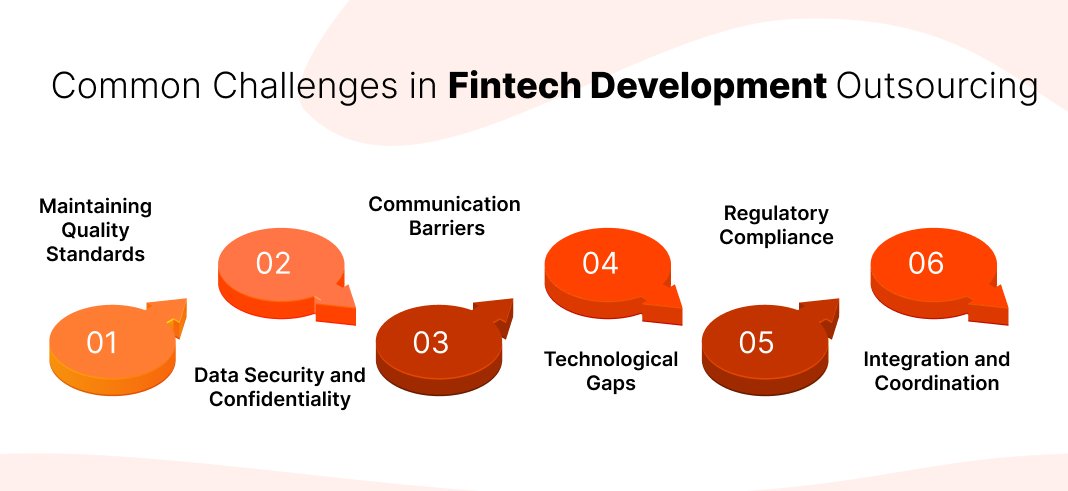
When it comes to outsourcing fintech development, technology has a huge role. For example, blockchain technology can improve security, transparency, and efficiency in financial transactions. However, if you don’t keep up with the latest technologies, your project could become outdated. This is especially true in the fast-growing fintech industry, where new trends and tools are constantly emerging.
Technological gaps can create problems when you’re trying to implement fintech app outsourcing strategies. If the team you’re working with doesn’t have access to the latest tools or doesn’t know how to use them, your app might not meet current industry standards.
Fintech compliance means taking proactive steps and staying alert with a deep understanding of regulations. Ignoring these rules will make your project unusable for your target customers.
Over time, fintech companies see changes in compliance and regulations. These ongoing changes require current practices to follow state and country laws. So, it's a significant issue.
Integrating with other technologies and apps can be tough for your project when outsourcing. It can reduce your business's productivity if integration and coordination are lacking. You can minimize this by creating a knowledge base for your product using tools like Document360.
Through outsourcing, your project might face challenges in excelling in practice. The vendor might overlook the necessary interactions to build strong client relationships.
Above, we have discussed the potential challenges associated with Fintech development outsourcing. However, these risks and challenges can be mitigated with the right approach and best practices that mainly include –
If the scope of your project is not clear or easy to understand, it can create problems throughout the entire process of fintech development. When you decide to outsource your project, it’s very important to know exactly what you want to achieve from it. Plus, you can break down the software development lifecycle into smaller steps or milestones when you have a well-defined goal.
When you outsource fintech development, there is always a risk related to data security and following the rules (compliance). If these issues are not handled properly, they can harm your brand’s reputation and weaken the trust your customers have in you. Because of this, it’s very important to make sure the company or vendor you’re working with keeps your agreement secure. They should not share any details about your project with outsiders.
When you outsource your fintech development, it’s very important to check the skills and experience of the developers. You should also understand the kind of resources they will use and the steps they will take to make sure your project is completed easily and without any problems. By knowing the expertise of the developers, you can have a better idea of what to expect from the outsourcing process.
If you don’t look at the current market conditions or study what your competitors are doing, it will be hard to succeed in the industry. That’s why it’s important to explore different market channels and consider various options before making a decision. You should also take the time to check the market reputation of the outsourcing partner you’re planning to work with.
Sometimes, outsourcing partners may add extra charges after the project is completed. To avoid this, you need to clearly define your budget and set limits on how much you’re willing to invest. A well-planned budget will help you manage costs and ensure your project runs smoothly. It will also help you achieve your goals, reach your target audience, and build trust in your brand.
The cost to develop a fintech app depends on your chosen outsourcing models and requirements. So, let’s take a closer look at the cost of outsourcing fintech development.
The cost of outsourcing can change based on two important things: the expertise of the developers and where they are located. On average, the cost of outsourcing fintech development can be:
There are also other factors that can add to the total cost. These include:
No matter what your requirements are, Mtoag Technologies can help you figure out the exact budget and timeline for your project. They will calculate everything based on your product specifications and business needs. If you’re ready to get started, you can get an estimate right now.
When you think about fintech development outsourcing, it’s important to understand why you want to do it. There are many reasons to consider outsourcing, such as gaining access to skilled experts, saving costs, launching your product faster, scaling your business easily, and focusing on your core business activities without distractions.
Outsourcing fintech development involves a series of steps. It starts with defining what you need for your project and then finding the right partner to work with. After that, you need to check their skills and expertise to ensure they’re a good fit. Finally, you will collaborate with them and keep track of the progress to ensure everything is on track.
However, there are challenges you should be aware of when outsourcing. To handle these challenges, it’s important to work with the right partner and use the best practices to solve any issues that come up.
Fintech development refers to creating and implementing innovative technologies designed to enhance and automate financial services. It involves developing software, applications, and platforms that improve processes like payments, lending, investing, and banking.
Outsourcing in the financial sector involves delegating specific business processes or services to external third-party providers. This can include tasks like IT support, customer service, data analysis, or software development. Companies outsource to reduce costs, access specialized expertise, and focus on core activities.
The four main types of fintech are payment platforms, lending services, wealth management, and blockchain and cryptocurrency platforms.
An example of fintech is mobile payment apps like Venmo or Google Pay. These apps allow users to transfer money, split bills, and make purchases seamlessly using their smartphones. They eliminate the need for cash or physical cards, offering convenience and speed.
Fintech development commonly uses programming languages like Python, Java, and JavaScript. Python is popular for data analysis and AI integration, Java for building secure and scalable systems, and JavaScript for creating interactive web and mobile applications.


Mobile app
In 2010, when Uber was first launched in San Francisco, who would have imagined that it would become the largest ride-sharing service it is today? Uber’s success has led to increasing demand for ride-sharing app development. We have seen many Uber competitors, like Lyft, Ola, and Bolt; however, Uber’s global reach and unique business model […]

Mobile app
Whether you have a breakthrough startup idea or are planning a digital transformation for your existing business, you will definitely need a mobile app to get started. However, without the technical know-how and budget to hire a mobile app development company, your dream project might remain just that—a dream. But luckily, technology has solutions to […]

Mobile app
The world around us is changing faster than ever. Just a year ago, most of us were still wrapping our heads around what AI could really do. But today, it is part of our everyday conversations. What once felt like science fiction is now shaping how we live and work. As we step into 2026, […]
Successful Projects
Years in Business
Happy Customers
We have been working with Mtoag Technologies for the past 5 years. They have been a very responsible team from the beginning. They are quick at responding, available whenever we need, and are extremely supportive when there’s a high-priority fix. All-inclusive, IAD can be your best bet for app development.