2500+
Successful Projects


Gone are the days when businesses had no other option than to use bulky software systems and pay hefty upfront costs. The emergence of Software-as-a-Service (SaaS) has been a game-changer for such organizations. They are increasingly ditching traditional software models for a more agile and affordable alternative. The prevalence of SaaS development can be gauged by the fact that 99% of organizations use at least one SaaS application.
But what exactly is SaaS, and why is it getting this much attention? The question might be lingering in your mind, especially if you’re just starting out in the tech world.
Table of Contents
With revenue predicted to reach approximately $439.82 billion in 2030 at a CAGR of 7.8%, SaaS has become a go-to choice for businesses, irrespective of their sizes. Compared to their cloud counterparts – Platform-as-a-Service (PaaS) and Infrastructure-as-a-Service (IaaS), SaaS products promise a much higher ROI and efficiency.
However, developing a SaaS application isn’t everyone’s cup of tea; only a professional SaaS development company can deliver the expected result. The development demands experience, expertise, industry knowledge, and attention to detail that cannot be overlooked.
Although your SaaS app development partner takes responsibility for delivering the end product, it is equally essential for you to understand the process. This will help you monitor the progress, guide the development team, integrate your suggestions, and enhance your decision-making abilities. So, to help you out, here’s a detailed guide to get started!
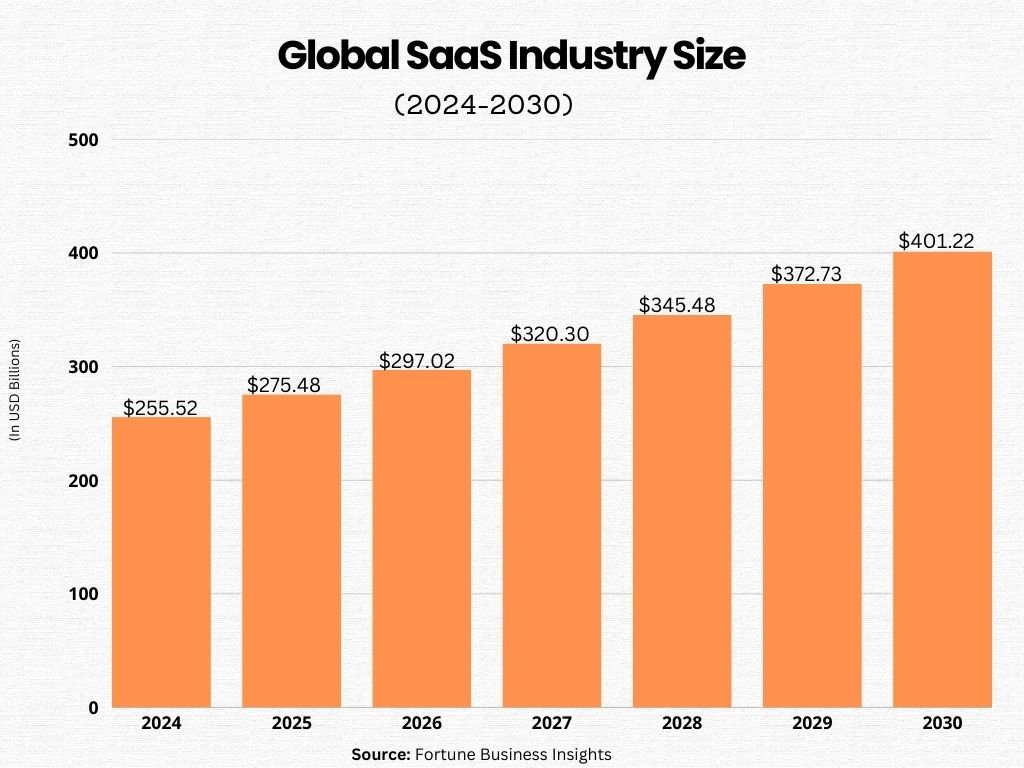
Software-as-a-Service, better known as SaaS in the tech industry, refers to a software distribution model where a client pays an annual contract value or a monthly subscription to get the software and customer support.
A provider usually hosts SaaS applications that are available to the client over the Internet, whether through the web, mobile app, or both. Although SaaS apps are quite popular, they are comparatively more generic than custom apps.
As the provider takes care of the hosting and maintenance, you can minimize your reliance on the It resources, freeing up both capital and the human team to work on core business activities.
The SaaS software solutions are typically available on subscription-based pricing, which allows clients to pay for what they use and budget the cost accordingly.
Before we move on to understanding the SaaS development process, it is important to be aware of its type so you get a better idea of what specific software solution you need for your business.
Here are different types of SaaS software based on usability:

The benefits of SaaS software solutions are aplenty for businesses, as evidenced by its growing popularity. If you still have doubts about whether SaaS development is worth it for your business, you need to check out its compelling advantages below:
The notable benefit of SaaS applications for businesses is that they never miss a payment. These software solutions automatically manage subscription billing to ensure steady, predictable monthly or annual payments from clients. They offer a more reliable cash flow than traditional software.
These software systems can predict the stream of subscription billing and customer growth through a deep understanding of the industry’s seasonality patterns and market dynamics.
As SaaS software are known for their cloud-native architecture, their integration with a wide range of third-party solutions is comparatively easier than traditional software. SaaS software providers use well-documented existing APIs to integrate additional functionalities into the system.
This helps businesses leverage the best of the industry with no need to invest in development from scratch, which leads to cost-saving for them.
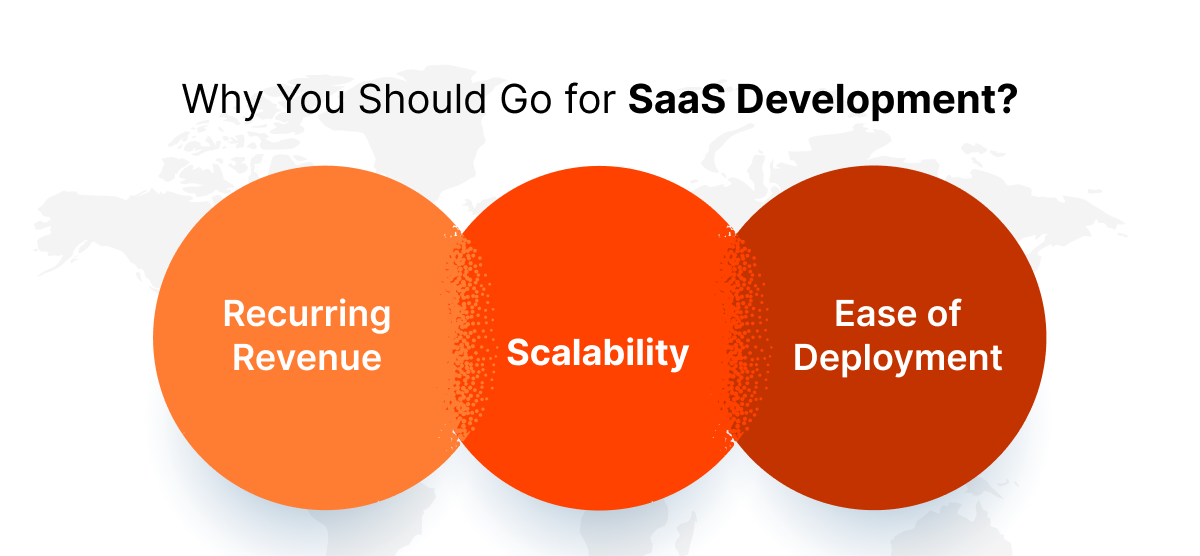
The ease of deployment SaaS applications offer is probably one of the compelling reasons to ditch traditional software. It reduces both the cost and time required to deliver the solution in the market.
The software’s ability to fix, update, and deploy in the cloud could potentially save software maintenance costs. This helps businesses provide value-added services, such as online training, user manuals, and cloud analytics.
So, here comes the most interesting part— the development process itself. Although SaaS apps are generally over-the-shelf solutions, you can also develop custom solutions based on your business-specific needs.
Validating an idea for a cloud-based product is very important. It helps ensure that you create something people need and that has a market. This step saves you from wasting time and money on a product no one wants.
The first step in validation is to research the market. You need to get an overview of the industry to understand the demand for similar products and to identify your competitors. Analyzing your findings helps you discover the latest trends in Software as a Service (SaaS) and find any gaps your product can fill.
Next, you need to identify your target audience. Determine exactly who will use your product and understand their pain points, needs, and preferences. Conducting interviews and surveys can help you find out if the problem you want to solve is something people actually struggle with. Knowing your audience well ensures that you create a product that meets their needs.
Evaluating the existing products in the market is another crucial step. Assessing their strengths and weaknesses helps you define your unique value proposition (UVP). Your UVP is what makes your product different and better than others.
After these steps, you can start shaping your product concept. It will be a blueprint for development, marketing, and execution. It should include a problem statement, which is a brief description of the problem your product addresses and how it solves it. It should also have a value proposition outlining your product's unique benefits and value. Lastly, describe your target market in detail, including demographics, job titles, industries, and any other relevant information.
To succeed in the SaaS business, it’s important to offer features that make your product stand out from others. Before starting SaaS application development, it’s a good idea to do a competitive analysis. This helps you understand what features customers want and increases your chances of becoming a leader in the industry.
Here's how to identify and prioritize features for your SaaS product:
First, identify your business goals. Knowing what you want to achieve helps guide your decisions. Next, understand the needs of your users. Find out what problems they face and what they need from your product. Then, write opportunity statements. These statements highlight the areas where your product can make a difference. After that, brainstorm feature ideas. Think about all the possible features that could benefit your users. Finally, prioritize these features.
To prioritize features effectively, think about what your customers need, how each feature impacts your core value proposition, and whether it is feasible to implement. It helps to list all the features you want to include in your product. You can use different models like MoSCoW, RICE, or Kano to identify critical, performance, and delighter features. Focus on delivering the most valuable features early in the development process.
The Kano model is one way to prioritize features. It helps you understand which features are essential and which can delight users. However, the necessary features depend on the type of SaaS app you are developing. Common must-have features include user authentication, data security (such as a password policy, data masking, and access controls), an intuitive user interface (with quick actions and mobile gestures), and customer support (like a knowledge base, chatbot and in-app messaging).
When starting, focus on delivering the core functionality to create version 1.0 of your product. This lets you test your business idea’s feasibility and determine the best way to build a SaaS application efficiently and cost-effectively. You can develop a successful SaaS product by prioritizing the right features and ensuring they meet user needs.
When building a SaaS product, finding the right balance between giving value to your customers and getting fair payment for your work is important. You also want to stay competitive.
Here are some popular pricing models to consider:
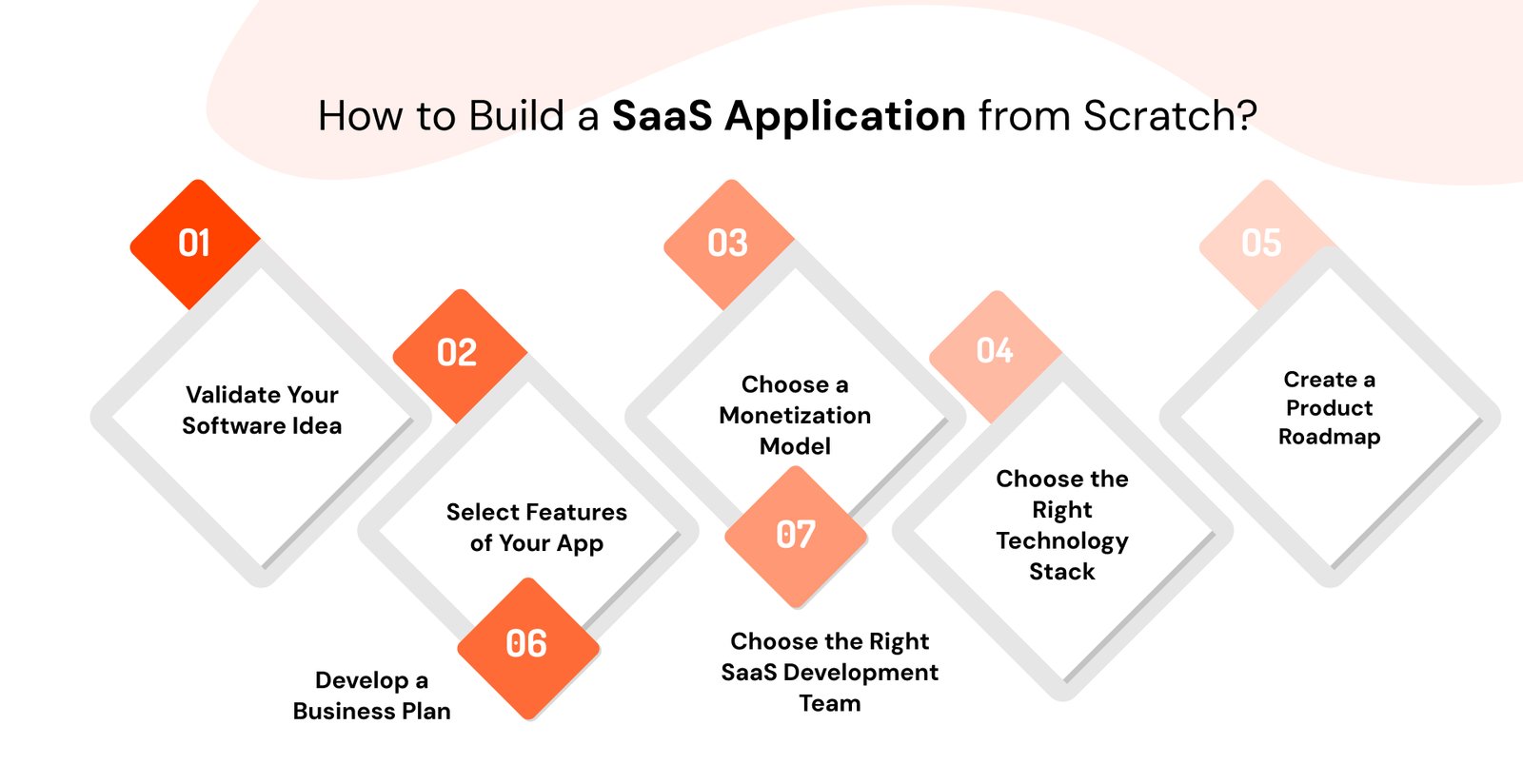
Choosing the right technologies is crucial when creating a SaaS product that can grow and handle many users at the same time. At Mtoag Technologies, we focus on the project discovery process. This means we carefully select the technologies that help our development team build a reliable, scalable, and secure solution quickly.
We use several web development technologies for SaaS product development. These technologies ensure that the product can handle increasing numbers of users smoothly.
Here are some common technologies used in SaaS development:
Technology Area | Technologies |
Front-End | HTML/CSS, JavaScript, React, Angular |
Back-End | Node.js, Ruby on Rails, Django |
Databases | MySQL, MongoDB |
Cloud Services | Google Cloud Platform (GCP), Amazon Web Services (AWS), Microsoft Azure |
Security | SSL/TLS, OAuth |
Now that you have a clear vision for your product and have identified and prioritized its features, the next step is to estimate the project scope and build a roadmap. This roadmap will guide you on how to build your SaaS product, ensuring it aligns with your vision and meets user needs.
First, set milestones for the development of your SaaS application. These milestones should include the release date for the Minimum Viable Product (MVP) and subsequent releases. Start by clarifying your overall goals for the SaaS application.
Identify the key phases of development. These usually include ideation, MVP development, beta testing, feature enhancements, scalability improvements, and ongoing maintenance.
Next, determine the timeframes for each milestone. Consider factors such as the complexity of the tasks, availability of resources, and dependencies between milestones.
To visualize the roadmap, create a template that outlines the timeline and key milestones. You can use tools like Gantt charts, spreadsheets, or specialized roadmap software to do this.
Creating a well-structured business plan is crucial for making smart business decisions, securing funding, and sharing your vision with stakeholders.
Here are the important points your plan should include:
When you need software development specialists to build a SaaS product, you have three main options:
This choice is great if you're looking for the most cost-effective way to build your SaaS product. Freelancers can offer lower prices, but there can be concerns about reliability. The quality of work from different freelancers can vary a lot. If you hire someone whose work doesn’t meet your standards, you may end up spending more time and money on revisions.
This option gives you complete control over the development process. You can manage everything directly. However, having an in-house team can be expensive. Costs include software licensing, hardware, taxes, salaries, and other compensation.

This choice helps you avoid the high operating costs mentioned earlier. Outsourcing requires a dedicated team of experts, including software developers, UX/UI designers, quality assurance engineers, and project managers. They have experience in creating reliable cloud-based products. They will also ensure that your product meets industry standards and suits your specific business needs.
Let's estimate the cost of creating a basic project management and collaboration platform for small to medium-sized businesses. The basic and essential features of your SaaS app include user authentication and role management, project and task management, file and document sharing, team chat and messaging, dashboard, and reporting, a mobile app for iOS, and integration with Google Workspace for email and calendar synchronization.
Suppose you are hiring a team from Europe to develop this platform. Here are the estimated costs for each team member:
The cost of using Amazon Web Services (AWS) can vary greatly depending on usage and the specific services chosen. For a small to medium-sized SaaS application, the monthly cost might be between $1,000 and $3,000.
Therefore, the total estimated cost for developing this SaaS platform (excluding AWS costs) ranges from $174,000 to $396,000. It's important to note that this estimate does not include other expenses like legal and compliance fees, marketing costs, ongoing operational expenses, or post-launch support.
We hope this guide has helped you understand how to build a SaaS app efficiently and cost-effectively. The SaaS model has many advantages over traditional software. These include recurring income, low initial costs, scalability, global reach, automatic updates, and strong security measures.
If you are looking for an experienced SaaS software development team, Mtoag Technologies is ready to assist. We have a proven track record of building various cloud solutions across different industries. This means we know how to create a SaaS solution that meets the highest business standards.
SaaS stands for Software as a Service. It is a way of delivering software over the Internet. Instead of installing software on your computer, you access it through a web browser. SaaS allows users to use applications online without downloading or maintaining them.
SaaS development is the process of creating software applications that are delivered over the internet as a service. This involves designing, coding, testing, and maintaining software that users can access online. SaaS developers focus on making sure the software is reliable, secure, and scalable. They use cloud technologies to build and deploy these applications, ensuring they meet the needs of their users.
An example of SaaS is Microsoft Office 365. Instead of purchasing and installing Microsoft Office on your computer, you can subscribe to Office 365 and use applications like Word, Excel, and PowerPoint online.
Yes, coding is needed for SaaS development. Creating a SaaS application involves writing code to build the software's features and functionalities. Developers use programming languages like JavaScript, Python, and Ruby to create the application.
Yes, SaaS can be a mobile app. Many SaaS products are available as mobile applications, allowing users to access the service from their smartphones or tablets. This provides flexibility and convenience, as users can use the service on the go.
Yes, many SaaS applications use AI to enhance their functionalities. AI can be used for various purposes, such as automating tasks, providing personalized recommendations, analyzing data, and improving user experiences. For example, AI-powered chatbots in SaaS applications can provide customer support, while machine learning algorithms can analyze user data to offer insights and predictions.

Software Development
Nearshore software development has emerged as a go-to alternative to in-house tech hiring in recent times. And why not? It is actually the best way for businesses to explore beyond their geographical borders and hire skilled IT talents to build their software. However, the only condition remains that there shouldn’t be much timezone difference. This […]

Software Development
For those who think building a website is enough to take their business online, let us clear one thing – it’s just half of the digital transformation process. The rest depends on how well you market your site and your approach to making it visible to your targeted audience. And if you live in a […]

Software Development
The excessive dependency on advanced technologies, the convenience of doing everything from home, and saving from the hassle of standing in long queues at the hospital have led to the rising demand for telemedicine app development. The healthcare industry has witnessed the most significant transformation triggered by the pandemic, with more and more patients opting […]
Successful Projects
Years in Business
Happy Customers
We have been working with Mtoag Technologies for the past 5 years. They have been a very responsible team from the beginning. They are quick at responding, available whenever we need, and are extremely supportive when there’s a high-priority fix. All-inclusive, IAD can be your best bet for app development.